

The
Serpent
Slayer's
Lore
Complete archive of Indo-European literature and mythos. Here, you can find all the primary source references for ancient narratives and characters of the Indo-European world, as well as relevant academic research in the fields of linguistics, philology and comparative mythology.



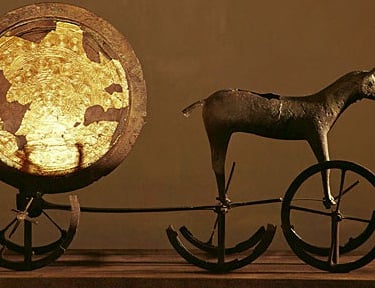

For the serious inquirer...
Here follows an assortment of clarifications and explanations of what Indo-Europeanism, as in, the beliefs and practices of the Indo-European peoples since the Proto-Indo-Europeans, actually was and is.
"Courageous, unconcerned, mocking, violent—thus does Wisdom want us: she is a woman and always loves only a warrior" Friedrich Nietzsche, Thus Spoke Zarathustra.
The Romans and Greeks did not copy each other.
The similarities between Greek and Roman faith are blatant. This does not, however, mean that one copied the other, as most assume. The Hellenes and Latins were both inheritors of the Proto-Indo-European legacy, they received from them their blood and physical bodies, their language and traditions, and, of course, their faith and beliefs.
Disregard any who speak of any Indo-European people without anchoring their thought in this inheritance, they are misunderstanding, or perhaps rejecting, the very core of such peoples and what they believe in. They fail to see the millennia of uninterrupted continuity that links not only the Greeks and Romans, but also the broader Germanic, the broader Celts, the Slavs, the Indo-Aryans, etc. It is like attempting to describe someone while entirely rejecting their context and history.
Even without this well-established historical link, any who study such things deep enough can see, in essence, the same things, for all the Indo-European peoples sought to describe the world they live in, and they did so very similarly to one another. It is more what unites the Indo-Europeans than what divides them, and the differences are apparent, and meaningful, only at the very surface of inquiry and immersion into that world. The deeper one goes, the less turbulent the waters, and more clear is the heart of this ancient spirit. It is not as relevant whether this or that Storm-God is accompanied by an eagle or symbolized instead by a bear, what is relevant is what emotion he conjured in the stomachs of the people who praised him, what they referred to, in the world and in their hearts, when they said his name. The experience of such Gods did not change, not substantially, though people tend to be careless and fickle in how they express themselves, thus making the same experience be communicated differently over time, focusing on these differences of communication is being pedantic, and ignorant, and missing the very point of what is being communicated, and why.
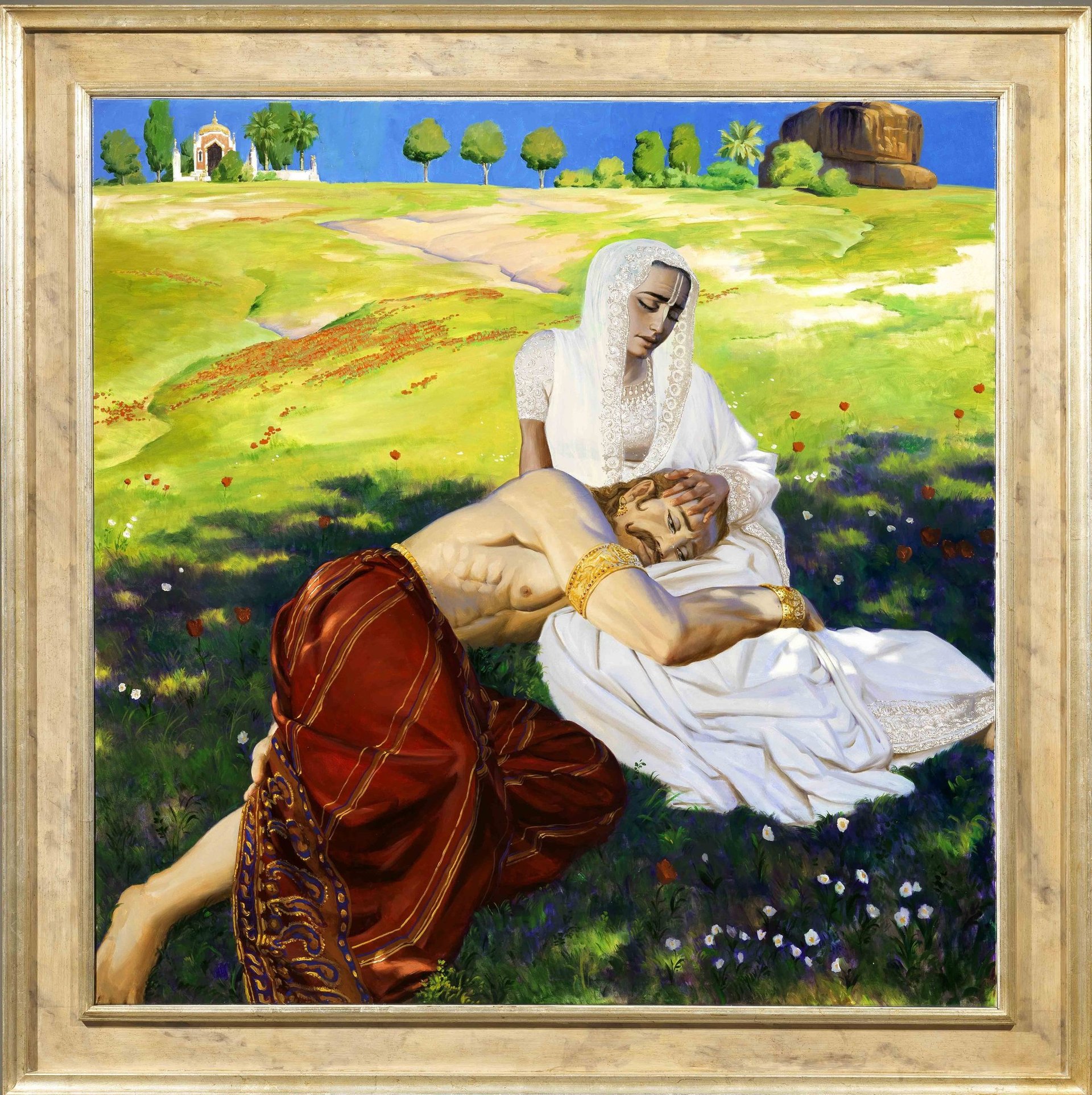
...ekaṃ sad viprā bahudhā vadanti...
Ṛgveda: 1:164
...The truth is one. The wise call it by many names...
Indoeuropeanism is not a religion...
The word "religion" entered the Anglo-Saxon lexicon through the French-speaking Normans only in the 1200s. So what was the word, for those people, for such a concept for the thousands of years that preceded this? There wasn't one. There was no religion.
The concept of religion is a result of Abrahamic tradition, absorbed by the Roman empire, and nothing similar to it could be found amongst any of the Indo-Europeans before then. It comes from a separation, a compartmentalization if you will, of devotion and worship. A separation of the mundane affairs and the holy affairs. With it, faith became something that you do, at a particular time and a place (think of a Christian person going to a Church on Sunday). This separation was simply not present in the Indo-European world, where devotion and worship permeated every part of existence and life. For the Indo-Europeans, devotion to the Gods was the primary mode of existence, not something to set some time aside for after it remains latent, in the background. The Indo-Europeans lived and breathed for the Gods and the duties and expectations that incited from them. This comes, of course, from a fundamental difference in how they experienced the deities. They saw them as living with them, side-by-side, in a constant, reciprocal relationship, that was simply overwhelming and unavoidable. If one worships the Sun, for instance, or the Storm, they need not go to a Sun-church or a Storm-church, they are right there. Furthermore, devotion to the Indo-Europeans was not a matter of avoiding punishment and seeking reward, be it hell or riches, but rather something so inherent and fundamental as the need to love, to play, to eat.
This "religion" was instead a lived experience, with direct, tangible, not at all delayed consequences. There is a reason why religion was absorbed through the Roman Empire: for many thousands of years the Indo-Europeans did not depart so much from the pure noncivilization of Steppe Pastoralism (thus they were deemed "barbarians", uncivilized in antiquity). The impersonal systems that are brought alongside the development of civilization and urbanism fundamentally alter the perception of who has the power and does not in a person's life. Notice the difference:
You are a Caledonian celt in Scotland. You live by herding livestock, and hunting, with some agricultural support. Much of your cattle has gotten an unpredictable disease and died. Wild game around you has, for one reason or another, chosen to migrate elsewhere. A particularly dry season has made your crops worthless. You are hungry, whose fault is it?
You are both an ancient Roman citizen, at the apex of civilization, and also you, at this very moment, in a developed Western nation-state. A lot of your income has been taxed excessively. Your car, from a poor brand, broke down. Your landlord just raised you rent. Your company fired you. You are hungry, whose fault is it?
In the first case, it is nobody's fault really. One can hardly prevent the inevitable plagues and cyclical realities of nature, which you, as a Caledonian were subjected to. And you also fully believed such realities were brought by essential forces of Nature, who you named as Gods. Therefore, you are hungry because of the Gods whims and wills. But in the second case, your entire life, in civilization, is being dictated by the whims and wills of mortals around you. Whether it be their incompetence, sheer malevolence, or perhaps one instance or another where you are greatly benefitted by someone's kindness and generosity. Regardless, when you can name and record the very people who fired you and increased your taxes, you are many steps away from tracing the causes to any Gods. It is inevitable then, for someone at the height of civilization to, at the very least, feel separate, distant, from such higher forces, for they are not at all directly impacted by them. Not in perception, at least. This is good soil for religion then, the Gods do not lower your taxes, but they define where you will go after all this is over. You see no Gods in the concrete jungles that surround you, but surely He can be found at your local Temple-Church.
... But not yet a free-for-all.
Having said all of this, it is paramount to consider that the lack of a proper, organized religion in the Indo-European world does not mean it was any less of a serious or strict endeavor. Much the opposite! I see many people using that fact as an argument, and a segway, to, in simple words, do and believe whatever they want. No, there is no Indo-European dogma, be it Hellenic or Slavic, and no, there is no central authority that dictates who and what the Gods are. There is no defined canon. There are no rules. Not by men, at least. This does not mean, however, that you should simply invent and go by vibes and "what feels right."
For the Indo-European, the entire life was a cultic act. Existence was a ritual. Life was worship. Is it not foolish to think that this context is a good basis for making legitimate and valid any sort of opinion and thought? The reason there was no human or institutional central authority is because the world was the central authority. Indoeuropeanism is the people's attempt to be as accurate and substantial a description of reality and the forces that dictate as possible. So, do not go online and post about how you feel that Zeus is this or that. It is not about you, if you are or were an Indo-European, Zeus is actually out there. He is something tangible, concrete, so seek it out (outside of your mind and self) and describe it. Why is Zeus a rapist? Because Storms are invasive, reckless, unconcerned, unperturbed by the desires of those below him. The day Storms ask for the consent of people before it rains, then Zeus will stop being a rapist. It is that simple. So, do not look at an ancient text and see it as authoritative. There is no Indo-European Bible. There is no Indo-European preaching. The ancient mythological texts are, paradoxically, closer to science in their intentions and methods: they are the attempt to empirically decode the universe and to communicate it holistically and effectively (through metaphor, allegory, etc).

...Lítilla sanda lítilla sæva
lítil eru geð guma;
því allir menn urðu-t jafnspakir;
half er öld hvar...
The words of Óðinn in Hávamál 53.
...A little sand has a little sea,
And small are the minds of men;
Though all men are not equal in wisdom,
Yet half-wise only are all...